DKA Warning Signs: How to Spot Diabetic Ketoacidosis Early & Act Fast
Know the Signs, Save Your Life
You know what DKA is. You know how it's different from ketosis. Now let's talk about the most important part: recognizing when it's happening and knowing exactly what to do.
This information could save your life or the life of a loved one with diabetes.
What is an "Unexplained High Blood Sugar"?
The first warning sign of DKA is what we call an "unexplained hyperglycemic event." Hyperglycemia just means high blood sugar.
Not all high blood sugars are dangerous. Sometimes you know exactly why your blood sugar is high:
You ate birthday cake and forgot to take insulin
You underestimated your carbs at dinner
You're fighting a cold and your body needs more insulin
These are EXPLAINED highs. You know what caused them.
An UNEXPLAINED high is different. This is when your blood sugar is high and you can't figure out why:
You took your insulin like you're supposed to
You didn't eat anything unusual
But your blood sugar is over 250 and it's NOT coming down
The Number to Look Out For: 250
Think of 250 mg/dL as your red flag number. When your blood sugar goes above 250 mg/dL and you can't explain why, your warning alarm should go off.
Even more concerning: if your blood sugar stays above 250 mg/dL for more than two hours, even after you've given correction insulin, something is wrong.
This is especially true for insulin pump users. If you've corrected your high but two hours later you're still high, your pump site might have failed. You might not be getting any insulin at all.
Why Pump Users Need Extra Caution
If you use an insulin pump, listen carefully to this advice: NEVER change your pump site right before bed.
Here's why: If you change your site at 10 PM and go to sleep, and something went wrong with that site change, you won't know. You'll sleep through it. By morning, you could be in serious trouble.
Always change pump sites during the day when you have several hours to stay awake and watch your blood sugar. If the site fails, you'll catch it early.
The Warning Signs Checklist
Here are the signs that DKA might be developing:
Early Warning Signs:
Blood sugar over 250 mg/dL that won't come down
Blood sugar rising even after correction insulin
Feeling more tired than usual
Increased thirst
Needing to urinate frequently
More Advanced Signs:
Nausea or vomiting
Stomach pain
Fruity-smelling breath (smells like nail polish remover)
Rapid, deep breathing
Confusion or difficulty concentrating
Extreme fatigue
If you're experiencing the advanced signs, you need medical help NOW. Don't wait.
The Ketone Test: Your Best Friend
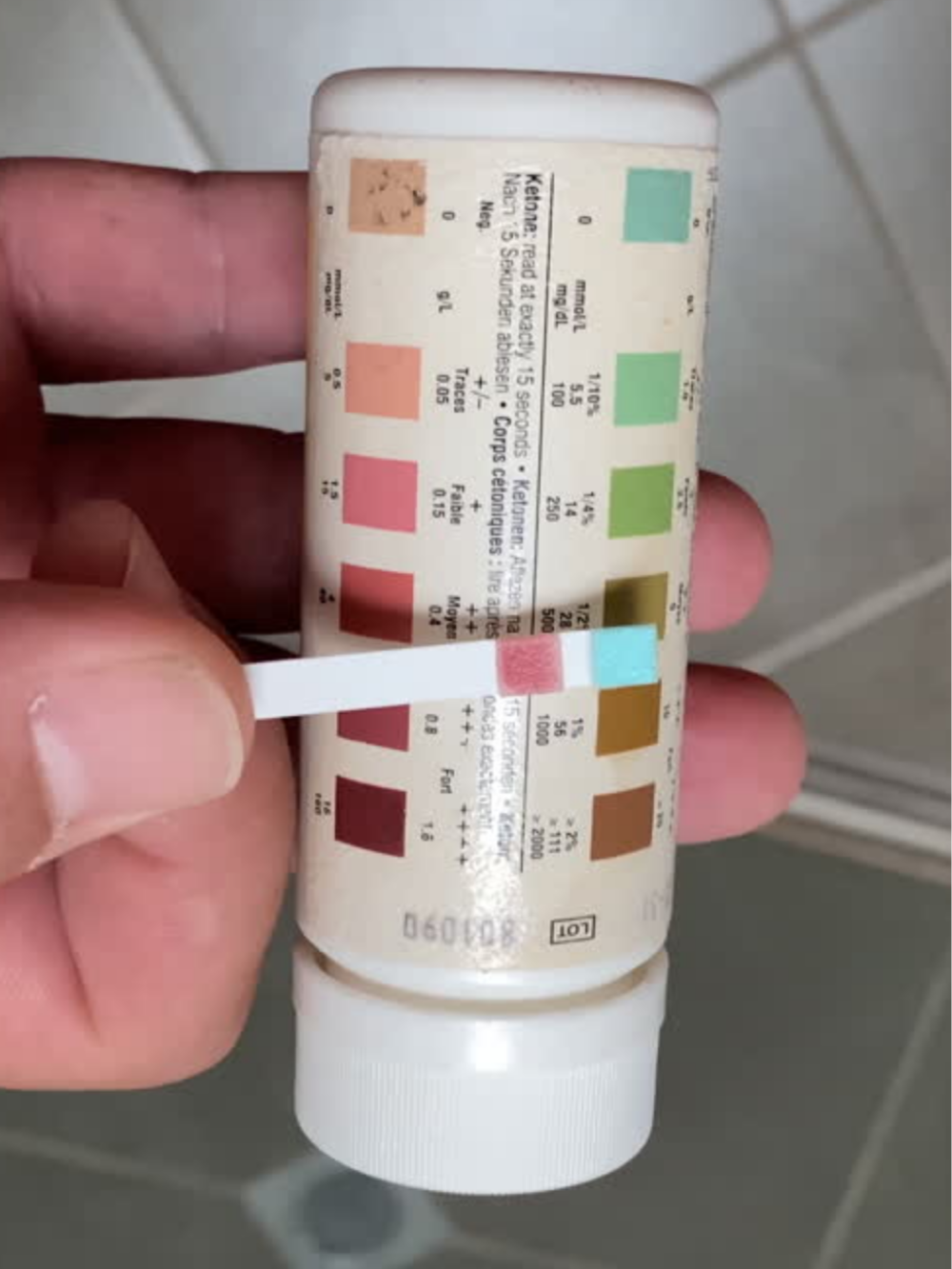
When you have an unexplained high blood sugar, ALWAYS test for ketones.
Ketone testing is simple:
Buy ketone test strips at any pharmacy (no prescription needed)
Urinate on the strip or dip it in a urine sample
Wait the recommended time (usually 15 seconds)
Compare the strip color to the chart on the bottle
The results will show:
Negative or Trace: You're probably okay, but keep monitoring
Small: Early warning - take action
Moderate: Danger zone - call your doctor
Large: Medical emergency - get help NOW
What NOT to Do: The Exercise Trap
Here's something that surprises people: if you have high blood sugar AND ketones, DO NOT EXERCISE.
I know this seems backwards. We always say exercise helps lower blood sugar, right? That's true normally. But not when you have ketones.
Think about it: Ketones mean your body is already breaking down fat because it doesn't have enough insulin. Exercise makes your body burn even MORE fat, which releases even MORE ketones.
More ketones = More acid in your blood = Worse DKA
It's like throwing gasoline on a fire. Don't do it.
Your DKA Prevention Action Plan
Here's what to do when you suspect DKA:
Step 1: Test and Assess
Check blood sugar
If over 250 mg/dL, test ketones
Note how you feel
Step 2: If Ketones Are Present
For insulin pump users:
Remove your pump site completely
Put in a fresh reservoir with NEW insulin
Insert a new infusion site
Give a correction dose through the pump OR give an injection with a pen or syringe
For injection users:
Check your insulin (Is it expired? Left in car? Looks cloudy?)
Use FRESH insulin from a new pen or vial
Give your correction dose
Make sure you're actually getting the insulin (pen clicking properly? Needle attached correctly?)
Step 3: Hydrate
Drink LOTS of water
Water helps flush out both glucose and ketones
Keep drinking throughout the process
Step 4: Monitor Closely
Recheck blood sugar every hour
Retest ketones every 1-3 hours
Watch for symptoms getting worse
Step 5: Know When to Call for Help
Call your doctor if:
Blood sugar won't come down after 4 hours
Ketones increase or stay high
You're vomiting (you can't keep fluids down)
You feel confused or extremely weak
Go to the emergency room if:
You have large ketones
You're vomiting and can't stop
You're having trouble breathing
You're very confused
Your symptoms are severe
Special Situations
Sick Days: When you're sick, your body usually needs MORE insulin, not less. Avoid skipping insulin doses while ill. Illness is a major DKA trigger.
Stress: Emotional or physical stress raises blood sugar. During stressful times, monitor more frequently.
Insulin Supply Issues: Avoid rationing insulin to make it last. Expired or improperly stored insulin won't work properly. If you're running low, contact your doctor or pharmacy immediately.
The Insulin Storage Rule
Insulin is a protein. Heat and cold damage it. Follow these rules:
Store new, unopened insulin in the refrigerator
Once opened, most insulin can stay at room temperature for 28-30 days
NEVER freeze insulin
NEVER leave insulin in a hot car
Check expiration dates
If insulin looks cloudy (when it should be clear) or has particles, throw it out
Bad insulin = No insulin = DKA risk
Your Personal DKA Prevention Plan
Every person with diabetes who uses insulin should have a written DKA prevention plan. Ask your doctor to help you create one that includes:
Your personal blood sugar threshold (when to worry)
Specific correction doses for you
When to test ketones
What to do if ketones are present
When to call your doctor
When to go to the ER
Emergency contact numbers
Keep this plan written down. Share it with family members. In an emergency, you might not be thinking clearly. Having it written down helps.
Technology Helps
If you have a continuous glucose monitor (CGM), you can set alarms to help alert you in the event of high glucose levels:
High alert at 250 (or your threshold number)
Urgent high alert at 300
Rate of change alerts (rising rapidly)
These alarms can wake you up at night if your blood sugar is climbing. They can catch problems early.
The Bottom Line
DKA is serious, but it's also preventable. The key is:
Know the warning signs
Test ketones when blood sugar is unexplained high
Act quickly
Never exercise with high blood sugar + ketones
Stay hydrated
Use fresh insulin
Call for help when needed
You don't have to live in fear of DKA. You just need to be informed and prepared.
Remember:
Unexplained high over 250 mg/dL = Red flag
High blood sugar + ketones = Take action
Can't explain it + Can't fix it = Call doctor
Trust your instincts. If something feels wrong, it probably is. When in doubt, check it out. Test those ketones. Call your doctor. Better safe than sorry.
Share This Information
If you found this helpful, please share it with other people with diabetes. DKA prevention knowledge saves lives. The more people who understand this, the safer our community becomes.
And remember: your healthcare team is there to help you. They WANT you to call with questions. They'd rather you call about a false alarm than end up in the hospital with DKA.
You've got this. Stay informed. Stay prepared. Stay safe.
Important Notice: This information is for educational purposes and is not intended as a substitute for medical care or medical advice from your doctor or healthcare team. Always talk to your doctor or healthcare team before making any changes to your diet, medications, or exercise routine.